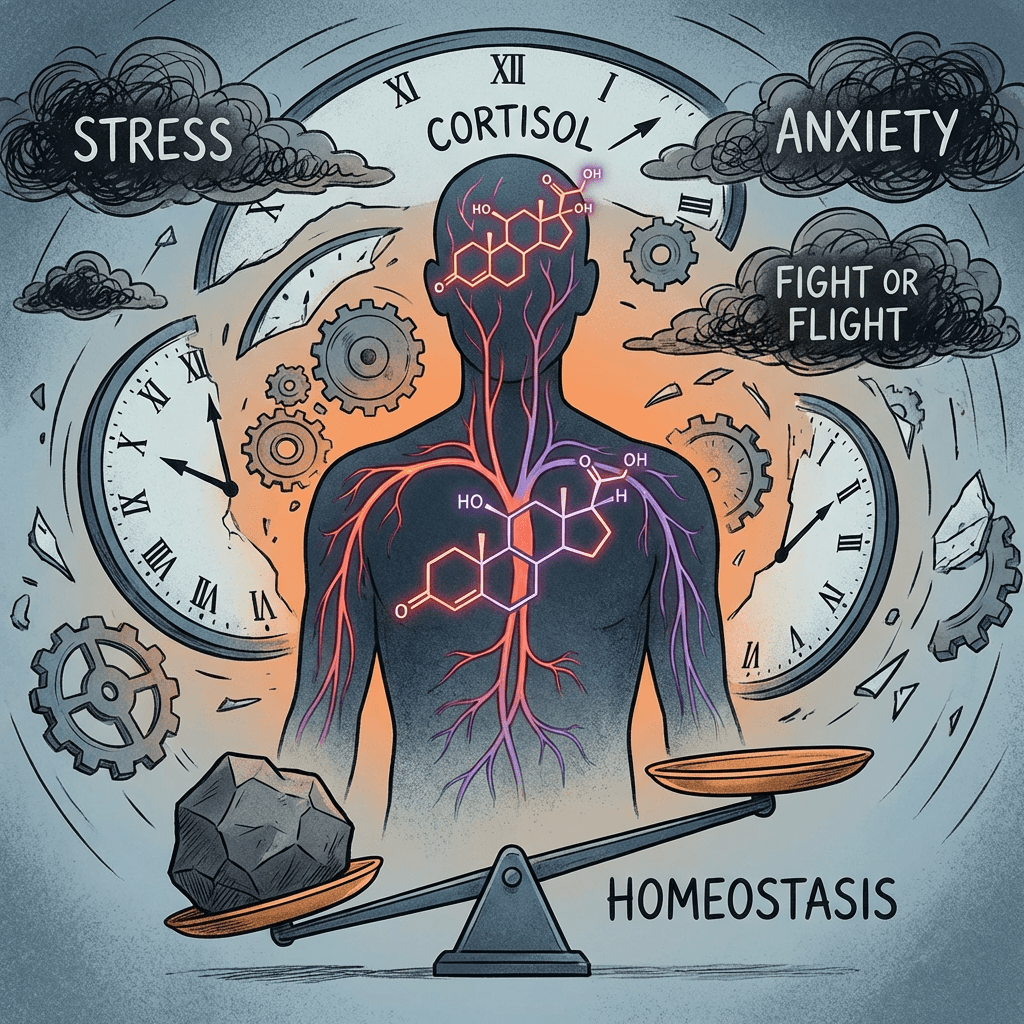
If you’ve been feeling exhausted but wired, struggling with stubborn weight gain, or noticing that your sleep and hormones seem completely out of balance, cortisol may be playing a larger role than you realize.
Often called the “stress hormone,” cortisol is one of the most important hormones in the body. While it is essential for survival, chronically elevated cortisol can disrupt nearly every system in the body, especially hormones, sleep, metabolism, and weight regulation.
For women over 35, this becomes even more important because hormonal shifts, increased life stress, poor sleep, and changes in metabolism can all amplify the effects of cortisol.
Let’s take a closer look at how cortisol affects your hormones, sleep, and weight — and what you can do to support your body.
What Is Cortisol?
Cortisol is a hormone produced by the adrenal glands and regulated by the hypothalamic-pituitary-adrenal (HPA) axis.
Its job is to help the body respond to stress, regulate blood sugar, support blood pressure, reduce inflammation, and maintain your sleep-wake cycle.
Under normal conditions, cortisol follows a natural daily rhythm:
- highest in the morning to help you wake up
- gradually declines throughout the day
- lowest at night to allow restful sleep
Problems arise when stress becomes chronic and cortisol remains elevated for long periods.
How Cortisol Affects Your Hormones
Cortisol doesn’t work alone. It interacts with almost every major hormone system in the body.
When cortisol stays elevated, it can suppress or disrupt other hormones.
Cortisol and Reproductive Hormones
One of the first systems affected by chronic stress is the reproductive hormone axis.
High cortisol can suppress signals from the brain that regulate ovulation and menstrual cycles.
This may lead to:
- irregular periods
- missed cycles
- worsened PMS symptoms
- low progesterone
- fertility challenges
- decreased libido
For many women, this can show up as cycles becoming unpredictable during stressful periods.
This is especially relevant in women over 35 who may already be navigating perimenopausal hormone fluctuations.
Cortisol and Thyroid Function
Cortisol can also interfere with thyroid hormone balance.
Chronically elevated cortisol may:
- suppress TSH signaling
- reduce conversion of T4 to active T3
- slow metabolism
- worsen fatigue
This can create symptoms that feel similar to low thyroid function, such as:
- weight gain
- low energy
- brain fog
- cold intolerance
- hair shedding
Cortisol and Blood Sugar Hormones
Cortisol has a direct impact on blood sugar and insulin.
It raises blood sugar levels by signaling the liver to release glucose and reducing glucose uptake in muscle and fat tissue.
Over time, this can contribute to:
- insulin resistance
- elevated fasting glucose
- increased cravings
- abdominal weight gain
- difficulty losing weight
This is one reason why chronic stress often makes fat loss feel much harder, even with healthy eating.
How Cortisol Affects Hunger Hormones
Have you ever noticed that when you’re stressed and sleep-deprived, you crave sugar and carbs?
That’s not a lack of willpower.
Cortisol influences key appetite hormones, including:
- ghrelin, the hunger hormone
- leptin, the satiety hormone
When cortisol is elevated and sleep is poor:
- ghrelin increases
- leptin decreases
This combination increases hunger and makes it harder to feel satisfied after eating.
This often leads to cravings for high-calorie comfort foods.
How Cortisol Disrupts Sleep
The relationship between cortisol and sleep works both ways.
Poor sleep raises cortisol, and elevated cortisol makes sleep worse.
This creates a frustrating cycle.
When cortisol is too high in the evening, the body remains in a hyper-alert state, making it difficult to relax and fall asleep.
Common signs include:
- trouble falling asleep
- waking up between 2–4 a.m.
- racing thoughts at night
- light, non-restorative sleep
- feeling tired but unable to rest
For many women, this becomes more noticeable during periods of high stress or hormone changes.
Cortisol and Weight Gain
One of the most common concerns women have is stress-related weight gain.
Cortisol is strongly linked to visceral fat storage, especially around the abdomen.
This type of weight gain often shows up as:
- increased belly fat
- waistline expansion
- “stress belly”
- puffiness in the face
- feeling softer despite unchanged habits
Unlike subcutaneous fat, visceral fat surrounds internal organs and is more strongly associated with metabolic risk.
Why Cortisol Causes Belly Fat
Cortisol promotes fat storage specifically in the abdominal region.
At the same time, it can contribute to muscle breakdown.
This means some women experience:
- more abdominal fat
- less muscle tone
- slower metabolism
- reduced strength
Less muscle mass can further reduce metabolic efficiency, making weight management more challenging.
Signs Your Cortisol May Be Elevated
Common signs of chronically elevated cortisol may include:
- stubborn belly weight gain
- poor sleep
- fatigue with wired energy
- sugar cravings
- irregular cycles
- anxiety or feeling on edge
- brain fog
- high blood pressure
- frequent illness or immune suppression
How to Support Healthy Cortisol Balance
The goal is not to “eliminate cortisol,” because cortisol is essential.
The goal is to restore healthy rhythm and regulation.
Helpful strategies include:
- prioritizing 7–9 hours of sleep
- eating balanced meals with adequate protein
- blood sugar support
- regular strength training and walking
- stress management practices
- reducing excessive caffeine
- morning sunlight exposure
- nervous system regulation techniques such as breathwork
For women over 35, addressing cortisol can be one of the most effective steps for improving hormone balance, sleep, and body composition.
Final Thoughts
Cortisol plays a powerful role in how you feel every day.
When chronically elevated, it can disrupt your hormones, interfere with sleep, increase cravings, and make weight loss feel nearly impossible.
Understanding how cortisol affects your body is the first step toward creating a plan that supports long-term hormonal and metabolic health.
Disclaimer: This article is intended for educational and informational purposes only and is not intended to diagnose, treat, or replace medical advice from your healthcare provider. Please consult a qualified medical professional regarding any symptoms, diagnosis, or treatment options.

 Hot Flashes & Cold Brew
Leave a comment