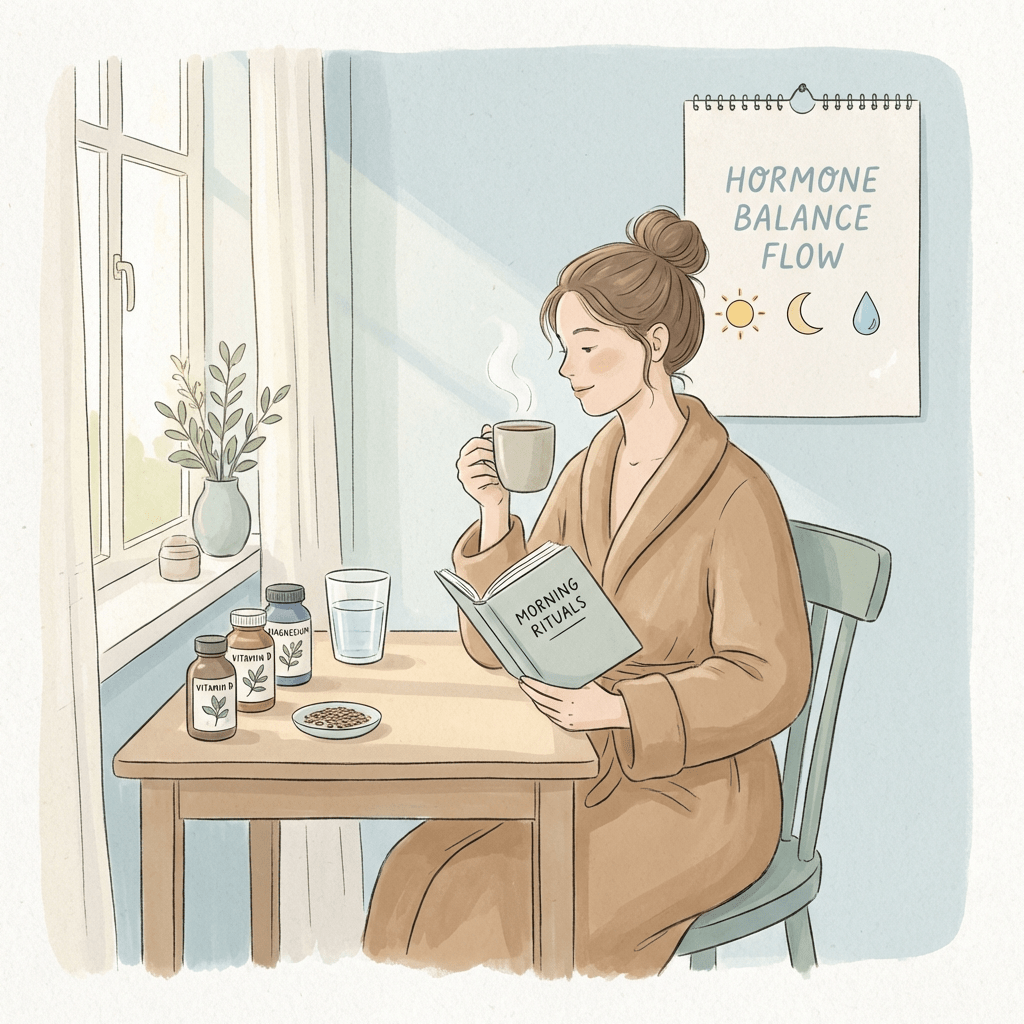
If your hormones have been feeling off lately — whether that looks like fatigue, poor sleep, mood swings, stubborn weight gain, or irregular cycles — your morning routine may be one of the most powerful places to start.
The way you begin your day sends signals to your body that help regulate cortisol, blood sugar, appetite hormones, thyroid function, and reproductive hormones.
The good news is that hormone support does not have to be complicated.
A few simple habits in the morning can help support your body’s natural rhythm and improve the way you feel throughout the day.
Here’s a simple morning routine for better hormone balance that is both realistic and rooted in science.
Why Your Morning Routine Matters for Hormones
Your body runs on an internal clock known as your circadian rhythm.
This rhythm helps regulate:
- cortisol
- melatonin
- insulin
- hunger hormones
- reproductive hormones
- energy and alertness
When your morning habits support this rhythm, your hormones tend to function more smoothly.
For women over 35, this becomes especially important as stress, perimenopause, and metabolic changes can make the body more sensitive to disruption.
1. Get Morning Sunlight Within the First Hour of Waking
One of the best things you can do for hormone balance is to get natural light exposure soon after waking.
Even 5 to 10 minutes of morning sunlight can make a difference.
Morning light helps:
- suppress melatonin
- support healthy cortisol rhythm
- improve daytime energy
- promote better sleep at night
- regulate mood
Cortisol naturally peaks in the early morning, which helps you wake up feeling alert and energized.
When you get sunlight early, you help reinforce this healthy rhythm.
A simple walk outside, sitting on the porch, or even stepping outside with your coffee can work beautifully.
2. Hydrate Before Coffee
After a full night of sleep, your body naturally wakes up in a mildly dehydrated state.
Hydration first thing in the morning supports:
- adrenal function
- blood pressure regulation
- energy production
- digestion
- hormone transport
Try drinking a large glass of water within the first 15 to 30 minutes of waking.
Some women also feel better adding minerals or electrolytes, especially if they tend to feel fatigued or lightheaded.
This small habit can help reduce stress on the body before adding caffeine.
3. Choose Gentle Morning Movement
Morning movement can be incredibly supportive for hormone balance, especially when it is not overly stressful.
Great options include:
- walking
- stretching
- yoga
- Pilates
- light strength work
- mobility exercises
Movement in the morning helps:
- improve insulin sensitivity
- support blood sugar balance
- reduce stress
- improve mood
- increase circulation
For women with high stress or hormone imbalances, gentle movement is often more supportive than intense fasted workouts.
Too much high-intensity exercise early in the morning, especially without fuel, may raise cortisol further.
4. Eat a Protein-Rich Breakfast
Skipping breakfast or relying on a carb-heavy meal can lead to blood sugar swings and increased cravings later in the day.
A balanced breakfast helps stabilize:
- insulin
- cortisol
- ghrelin (hunger hormone)
- leptin (satiety hormone)
Aim for a breakfast that includes:
- protein
- healthy fats
- fiber-rich carbohydrates
Examples include:
- eggs with avocado and fruit
- Greek yogurt with berries and chia seeds
- protein smoothie with greens and nut butter
- oatmeal with protein powder and flax seeds
Protein in the morning is especially helpful for women dealing with cortisol-related weight gain and blood sugar imbalance.
5. Delay Stress and Overstimulation
Many women start the day by immediately checking emails, social media, or jumping into work stress.
This can spike cortisol and create a feeling of being overwhelmed before the day even begins.
Instead, try giving yourself 15 to 30 minutes of calm space in the morning.
This may include:
- prayer or meditation
- deep breathing
- journaling
- reading something uplifting
- sitting quietly with your coffee
Supporting your nervous system early in the day can have a powerful effect on hormone regulation.
6. Support Blood Sugar Early
Stable blood sugar is one of the most important foundations for hormone balance.
When blood sugar spikes and crashes, cortisol often rises to help compensate.
This can worsen:
- cravings
- fatigue
- irritability
- weight gain
- hormonal symptoms
A protein-rich breakfast, morning movement, and limiting sugary coffee drinks can all help.
7. Keep Your Routine Consistent
Consistency matters more than perfection.
Your body thrives on predictable rhythms.
Try to keep a fairly consistent:
- wake time
- light exposure
- meal timing
- sleep schedule
This helps regulate your internal hormonal clock and supports better cortisol and melatonin patterns.
A Simple Morning Routine Example
Here’s what this might look like in real life:
6:30 a.m. – Wake and drink water
6:40 a.m. – Step outside for sunlight or stand by the window
6:50 a.m. – 10–15 minute walk or gentle stretching
7:15 a.m. – Protein-rich breakfast
7:30 a.m. – Quiet time, journaling, or prayer (I start every morning with a Thank You for waking me up today)
8:00 a.m. – Begin work or family responsibilities
Simple, sustainable, and hormone-friendly.
Final Thoughts
Hormone balance often starts with the small daily habits that support your body’s natural rhythm.
Morning light, hydration, movement, and balanced nutrition can make a meaningful difference in energy, sleep, weight, and mood.
For women over 35, a simple morning routine can be one of the most effective ways to support long-term hormone health.
Disclaimer: This article is intended for educational and informational purposes only and is not intended to diagnose, treat, or replace medical advice from your healthcare provider. Please consult a qualified medical professional regarding any symptoms, diagnosis, or treatment options.

 Hot Flashes & Cold Brew
Leave a comment