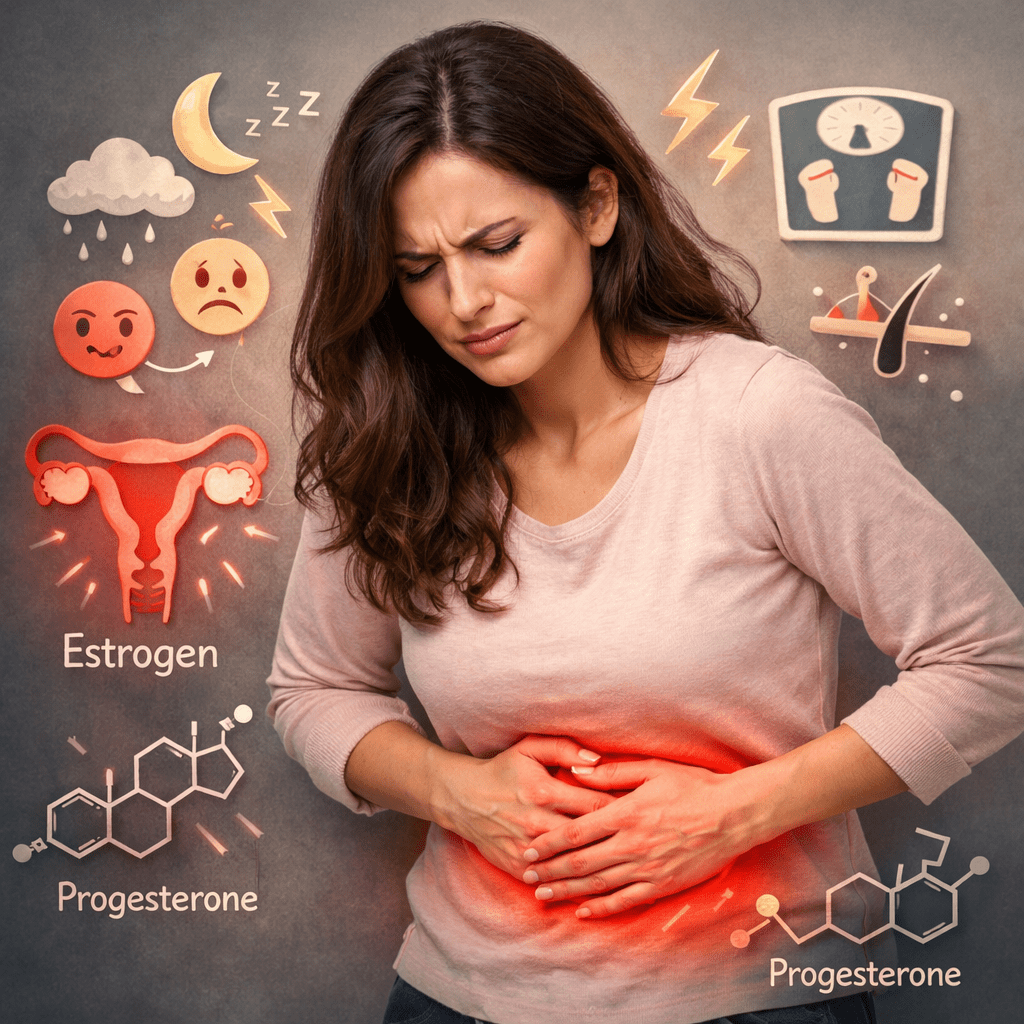
Have you been feeling off lately, but you can’t quite explain why?
Maybe you’re exhausted even after sleeping.
Maybe your moods feel unpredictable.
Maybe you’re gaining weight, waking up at night, or noticing changes in your cycle.
If so, your hormones may be trying to tell you something.
Hormones are your body’s chemical messengers. They help regulate everything from your sleep and mood to your metabolism, menstrual cycle, and energy levels.
When they become imbalanced, the symptoms can show up in ways that affect your whole body.
Let’s talk about some of the most common signs.
1. Fatigue That Doesn’t Improve With Rest
One of the most common signs of hormone imbalance is ongoing fatigue.
This can feel like:
- low energy throughout the day
- waking up tired
- afternoon crashes
- feeling mentally drained
Hormones that commonly contribute include:
- cortisol
- thyroid hormones
- progesterone
- estrogen
When these are out of balance, your body may struggle to maintain normal energy levels.
2. Irregular Periods or Changes in Your Cycle
For women, menstrual changes are often one of the clearest signs.
This may include:
- missed periods
- shorter or longer cycles
- heavier bleeding
- spotting between periods
- unpredictable cycle timing
This is especially common during perimenopause, when estrogen and progesterone begin fluctuating.
If your once-regular cycle suddenly changes, hormones may be the reason.
3. Difficulty Sleeping
Hormones play a major role in sleep quality.
You may notice:
- trouble falling asleep
- waking up at 3 AM
- night sweats
- restless sleep
- waking frequently
Estrogen and progesterone both support healthy sleep patterns, so when levels shift, sleep often suffers.
This is one of the biggest complaints I hear from women in their late 30s and 40s.
4. Mood Swings, Anxiety, or Irritability
Hormones directly affect the brain and nervous system.
When they fluctuate, it can show up emotionally.
This may feel like:
- irritability
- increased anxiety
- feeling overwhelmed
- mood swings
- feeling more emotional than usual
Many women describe it as not feeling like themselves.
This is very common during hormone shifts.
5. Weight Gain or Difficulty Losing Weight
If you’re doing “all the right things” but still struggling with weight changes, hormones may be contributing.
Hormonal imbalances can affect:
- metabolism
- insulin response
- cortisol levels
- fat storage
- appetite regulation
Cortisol, thyroid hormones, and insulin are common culprits here.
Weight gain around the midsection is especially common in perimenopause.
6. Skin and Hair Changes
Your skin and hair can often reflect what’s happening internally.
You may notice:
- increased acne
- dry skin
- thinning hair
- excess facial hair
- hair shedding
Hormones such as estrogen, testosterone, and thyroid hormones all influence skin and hair health.
7. Brain Fog and Trouble Concentrating
This is one of the most frustrating symptoms.
Hormone imbalance can make it harder to:
- focus
- remember things
- stay mentally sharp
- process information quickly
Many women describe this as brain fog.
Estrogen fluctuations are commonly linked to this, particularly during perimenopause.
8. Low Libido or Vaginal Dryness
Hormones also influence intimacy and sexual wellness.
Low estrogen levels may contribute to:
- decreased sex drive
- vaginal dryness
- discomfort during intercourse
These changes are common in midlife and are often hormone-related.
When Should You Talk to Your Provider?
Occasional fluctuations can happen.
But if these symptoms persist, worsen, or begin interfering with daily life, it may be time to speak with your healthcare provider.
Bloodwork may help assess hormones such as:
- thyroid panel
- cortisol
- estrogen
- progesterone
- FSH
- insulin markers
This helps identify what may be going on beneath the surface.
Final Thoughts
Hormonal imbalance doesn’t always show up as one obvious symptom.
Often, it appears as a combination of changes that make you feel unlike yourself.
Fatigue, mood shifts, poor sleep, irregular periods, and stubborn weight gain are all signs worth paying attention to.
Your body is always communicating.
Learning to recognize the signs is the first step toward healing and balance.

 Hot Flashes & Cold Brew
Leave a comment