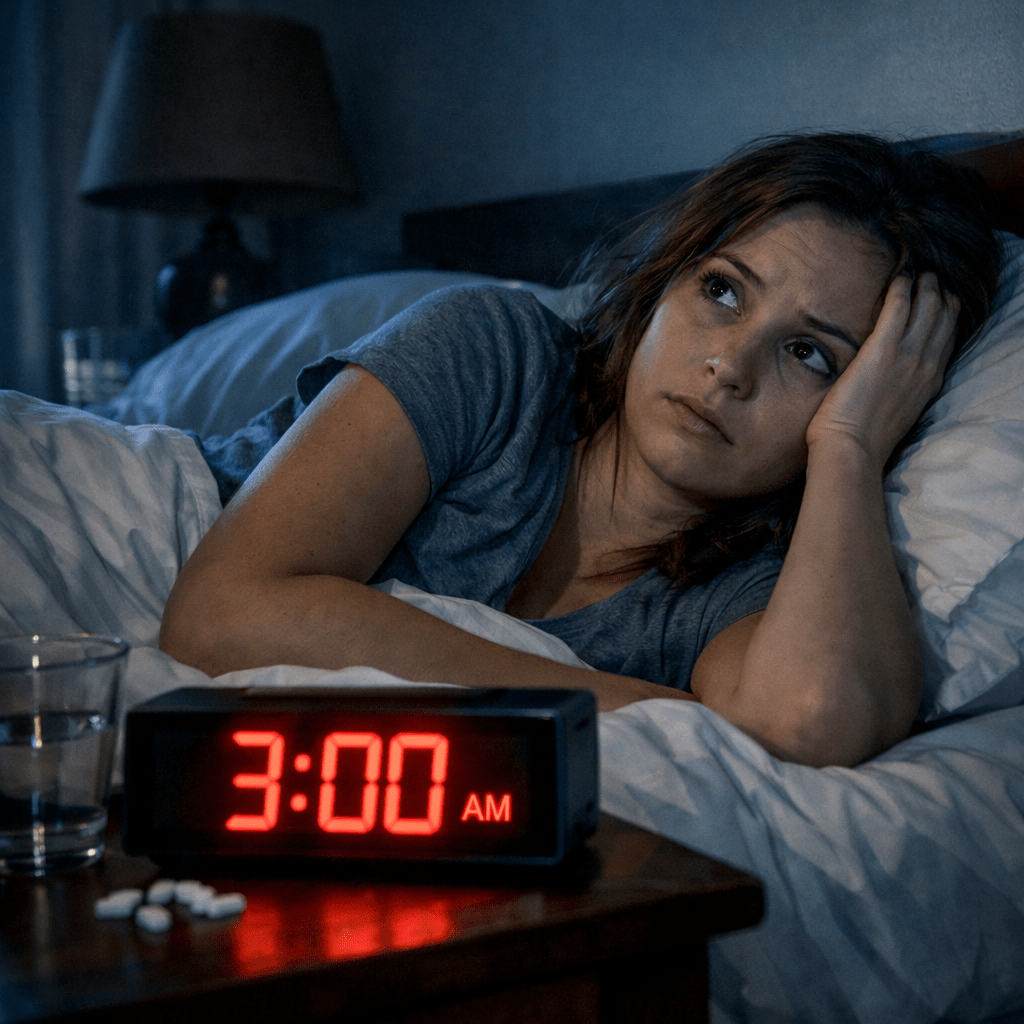
Have you been waking up at 3 AM night after night and wondering, What is going on with my body?
You’re exhausted.
You fall asleep just fine.
But then, like clockwork, you’re suddenly wide awake in the middle of the night.
If this sounds familiar, you are not alone, and no, it’s not “just stress.”
For many women in their late 30s and 40s, waking up at 3 AM can be one of the earliest and most frustrating signs of perimenopause.
Let’s talk about why this happens.
The Hormone Shift Behind 3 AM Wake-Ups
Perimenopause is the transition period leading up to menopause, and during this time your hormones begin to fluctuate in ways that can directly affect sleep.
The biggest players?
- declining estrogen (estradiol)
- lower progesterone
- rising FSH (follicle-stimulating hormone)
These hormonal shifts can disrupt the brain’s natural sleep-regulating centers, making it harder to stay asleep through the night.
This is why many women experience what’s called sleep maintenance insomnia, meaning you can fall asleep but struggle to remain asleep.
It’s Not Always Night Sweats
Many people assume waking up at night during perimenopause is only caused by hot flashes or night sweats.
While those absolutely play a role, that’s not the whole story.
In fact, many women wake up at 3 AM without feeling hot at all.
Hormonal changes themselves can fragment sleep and cause brief awakenings even in the absence of classic vasomotor symptoms.
So yes — even if you’re not sweating, your hormones may still be the reason.
Why 3 AM Specifically?
This is one of the most common questions women ask.
Why always 3 AM?
There are a few reasons.
1. Your Circadian Rhythm Shifts Earlier
As we get older, our internal body clock naturally shifts.
This means you may feel tired earlier in the evening, but it also means your body may start waking earlier too.
This makes the 3–5 AM window especially common for awakenings.
2. Lower Sleep Pressure
As we age, the natural “sleep pressure” that builds throughout the day can wear off more quickly.
By the second half of the night, your body may simply have a harder time staying deeply asleep.
3. Cortisol Can Start Rising
Early morning is when cortisol, your body’s natural wake-up hormone, begins to rise.
If you are already under stress, have blood sugar instability, or are in perimenopause, this rise may happen earlier or feel stronger.
This can make 3 AM wake-ups even more likely.
The Role of Progesterone
Progesterone is one of the most calming hormones in the female body.
It has natural anti-anxiety and sleep-promoting effects.
As progesterone begins to decline in perimenopause, many women notice:
- lighter sleep
- increased anxiety
- more nighttime awakenings
- difficulty falling back asleep
This is one of the biggest reasons sleep begins to feel “different.”
Other Possible Contributors
Sometimes hormones are the main cause, but there may be other factors contributing as well.
These can include:
- elevated cortisol and chronic stress
- blood sugar dips during the night
- nighttime urination
- thyroid imbalance
- sleep apnea
- restless legs
- anxiety
This is why it’s important to look at the whole-body picture.
What Can Help?
The good news is there are things you can do.
Some supportive strategies include:
support stable blood sugar
Try a protein-rich dinner and avoid high-sugar snacks late at night.
reduce evening caffeine
Even afternoon caffeine can impact sleep quality.
manage stress
Evening nervous system support can be incredibly helpful.
Think:
- prayer or journaling
- magnesium
- light stretching
- screen reduction
cool your sleep environment
Since perimenopause narrows your temperature regulation zone, a cooler room can help.
talk with your provider
If sleep disruption is ongoing, it may be worth discussing hormone support options with your healthcare provider.
Final Thoughts
If you’re waking up at 3 AM every night, please know this is a real and common perimenopause symptom.
It is not laziness.
It is not weakness.
And it is not all in your head.
Sometimes your body is simply responding to hormonal shifts that come with this stage of life.
Understanding what’s happening is the first step toward getting better sleep — and feeling like yourself again.

 Hot Flashes & Cold Brew
Leave a comment